Category: Blog
-
The Granite Creek Bomb
Among the debris flows into the South Fork Boise River on the evening of September 12, Granite Creek is worth a look. For one reason, we said it was a ticking time bomb here and here. Secondly, the debris flow appears significant in its scale and extent.
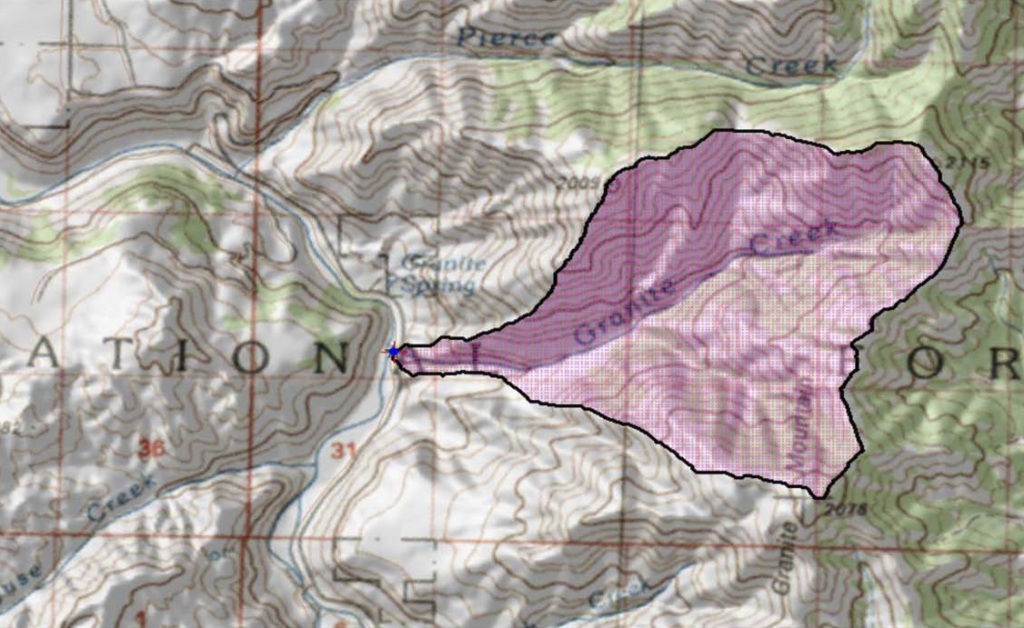
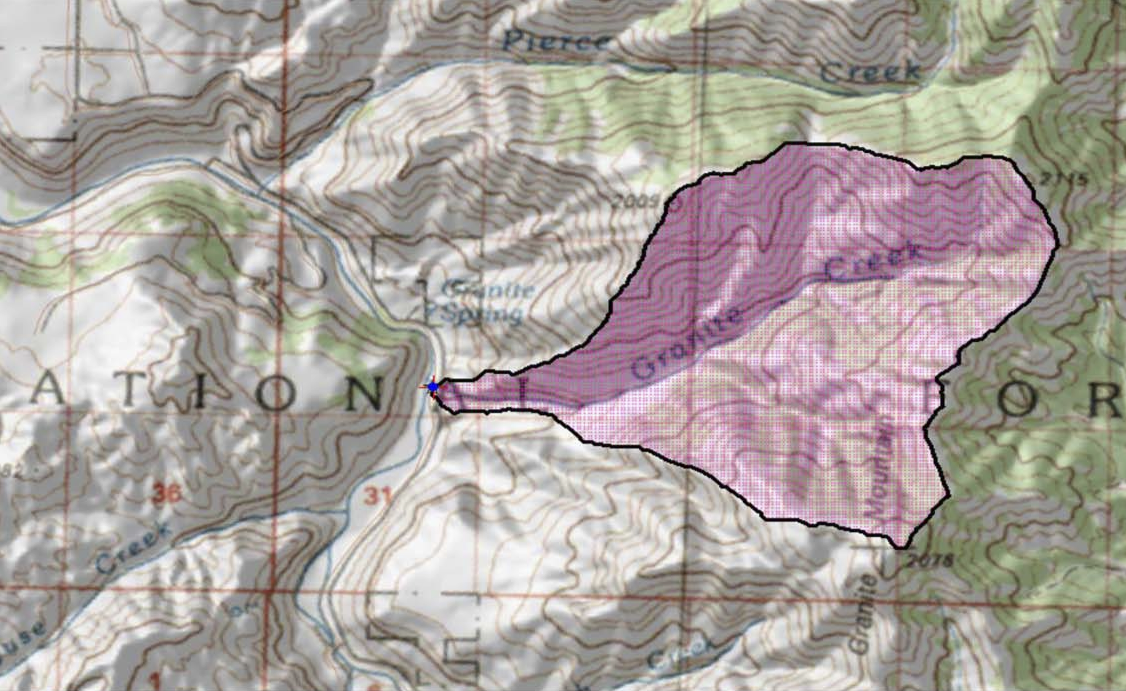
Map highlighting the Granite Creek Watershed First, the map above shows the watershed is about halfway between the Cow Creek bridge and the Danskin Bridge. Granite Creek is a tiny little thing with average flows in the winter months of a couple of cubic feet per second. In the spring there could be 10 to 20 cfs in the stream, based on a statistical report. All of this fits in a culvert under the South Fork road with a pipe of 36 inches in diameter.
We know from the 1978 study of the South Fork and tributaries that Granite Creek did have some documented spawning in it. In more recent years the culvert is considered an impediment to aquatic organism passage. Attempts to assess the culvert’s outflow were frustrated by too thick vegetation and steep slopes off the South Fork road.
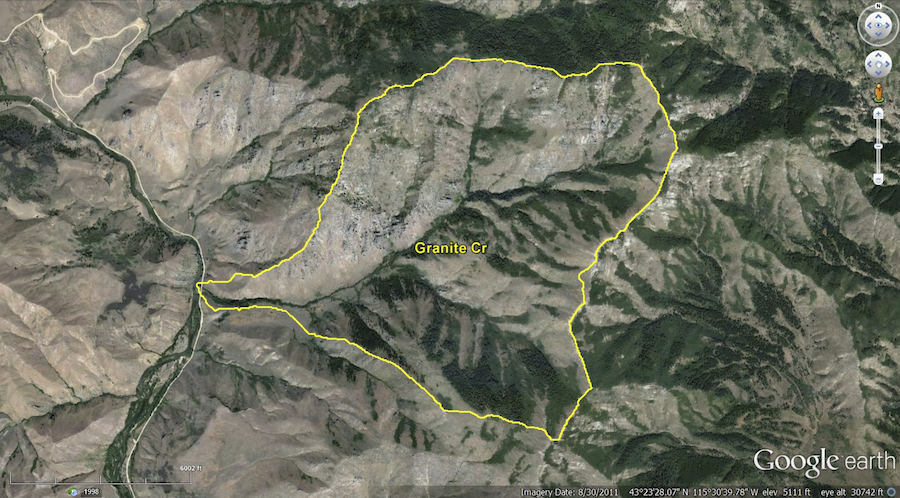
The Google Earth view of Granite Creek watershed. There is (or was) some forested sections in the Granite Creek watershed, primarily on the north facing slopes. It is approximately 3.5 square miles in size.
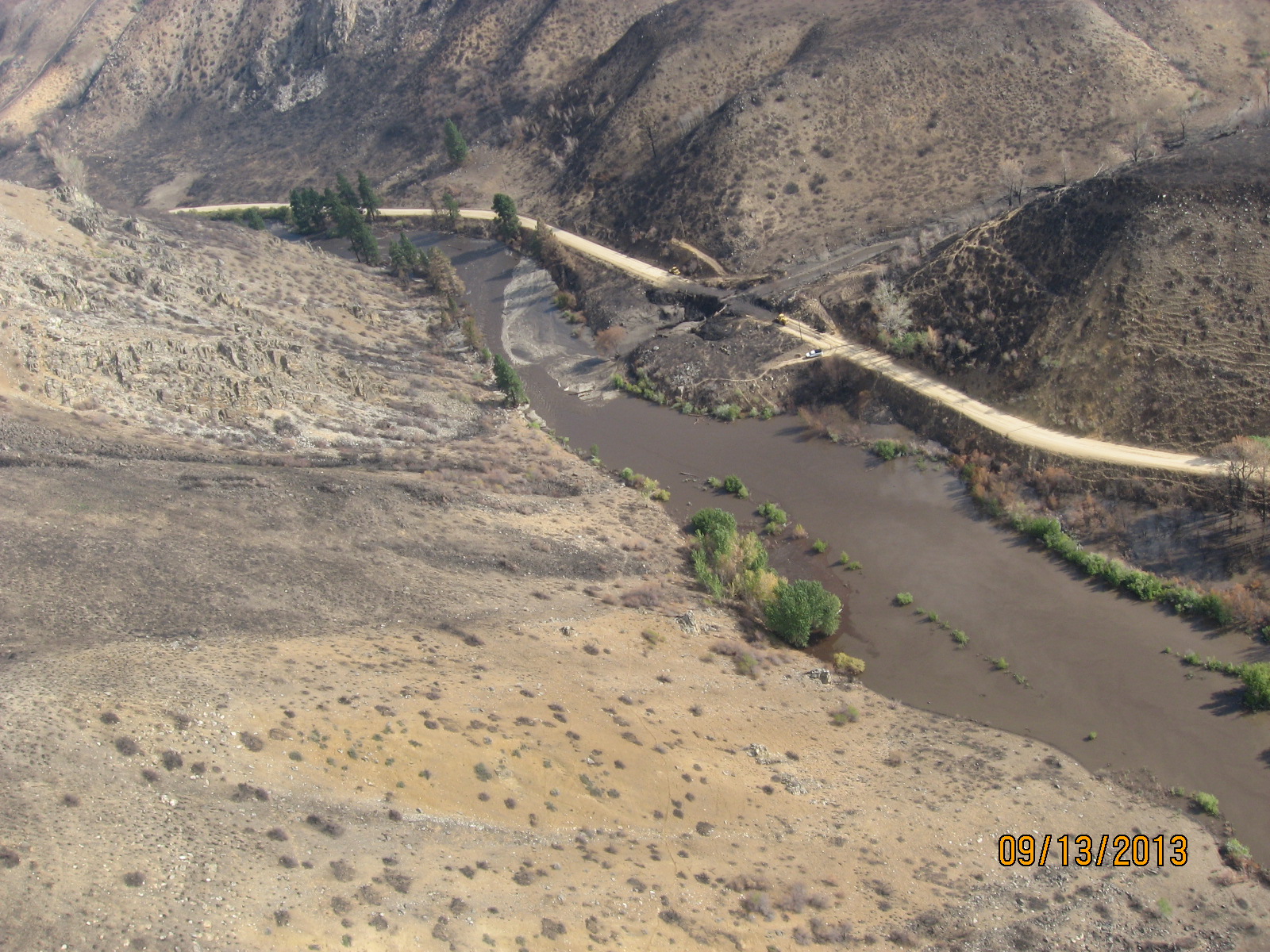
The photo from the air on Friday the 13th is dramatic:
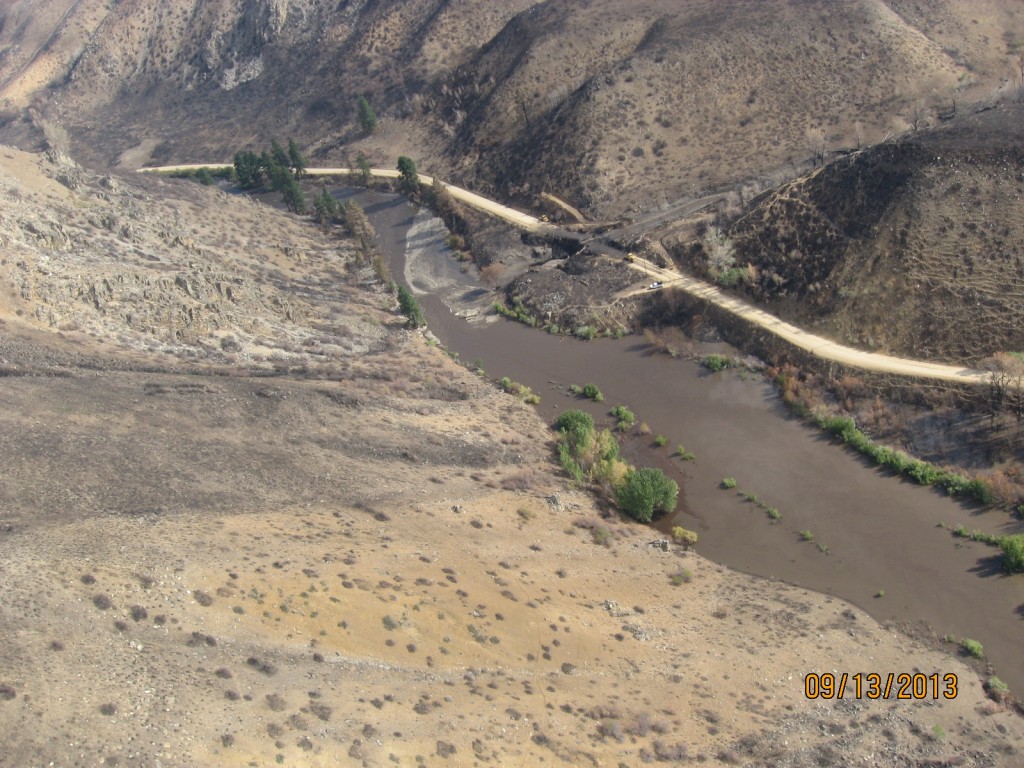
South Fork Boise River and Granite Creek debris flow. Courtesy USDA Forest Service. First, the debris flow overtopped the South Fork road as the little culvert was either plugged or overwhelmed. The debris fan extends well downstream as indicated by the tan or lighter-colored area in the South Fork Boise River, when compared to the chocolate color of the river upstream and on river left as it routes around the debris flow.
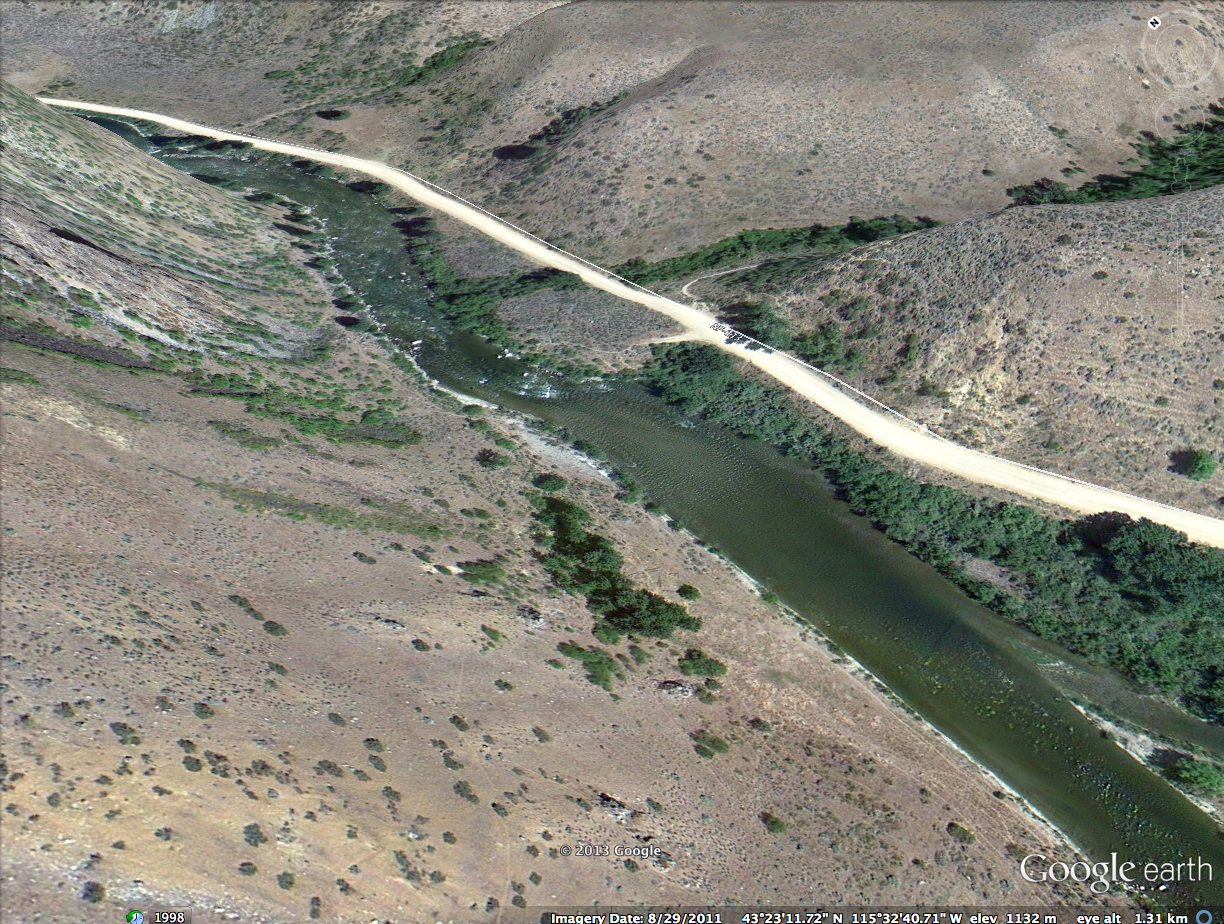
Another shocker is from the photo below using the Google Earth image generally in alignment with the above photo taken on Friday:
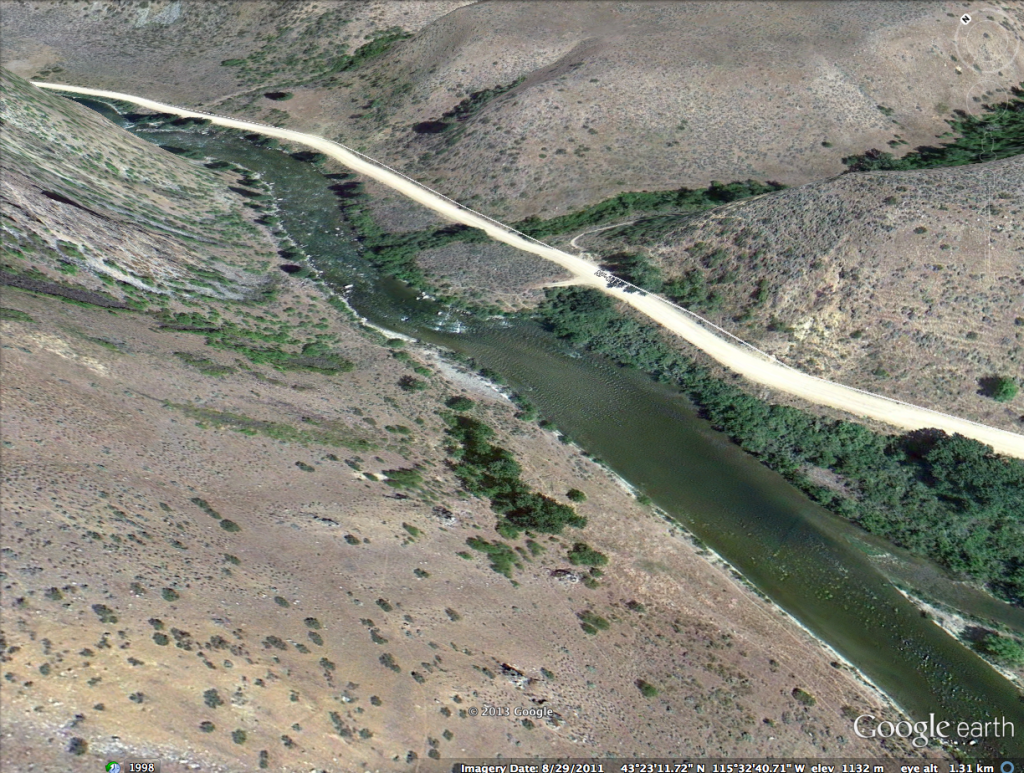
Google Earth angled image of Granite Creek confluence with South Fork Boise River Both photos show a river flowing at 600 cfs as the Google Earth flyover was August 29, 2011. The debris flow as apparently covered the Rock Garden section of the South Fork, burying that stretch of pocket water just as it enters the Pine Tree Hole.
More amazing is the amount of water backed up with the mud and debris deposited in the river. The water is backed up and at a much higher elevation, so much at the willows and other stream side bushes are inundated, surrounded by muddy waters. This is most apparent along the left bank. At the bottom of the slope the group of trees appears in water too! The water elevation appears to be 2-3 feet higher than normal.
This condition will not last as the river will continue to cut a channel through the debris and the smaller size material (silt and sand) will be carried downstream. That Pine Tree Hole is going to be full of material for some time.
How fast the river cuts a channel and clears out the smaller material is going to be affected by how much flow is in the river. The winter time flows of 300 cfs commence on September 16, so what ever energy the river has to move the material downstream will be greatly reduced.
A natural follow-on question is the effect of this and the other debris flows on the South Fork Boise River fishery. This is a question much more difficult to determine at this time. The extent of the numerous locations where flows entered the river and apparently blocks flows on Thursday the 12th must be considered in a cumulative fashion. A full accounting of the flows and estimates of each disturbance event would be a good first step.
A further consideration is that while fish populations can be affected by these type of disturbances and recover over time, the cumulative effect of several debris flows into a river that has a controlled flow release regime could mean the recovery of the river will be dependent on how the water releases are managed in the spring and summer months. For example, could artificial spring freshets be managed in order to help move sediment through the river system? This is a topic that conservation and angler groups will need to work with the government agencies and other affected water users.
-
South Fork Boise Community Meeting September 11th
In the wake of the Pony Complex and Elk Complex Fires and their destruction of substantial habitat along the South Fork of the Boise River downstream of Anderson Ranch Dam, the Ted Trueblood Chapter of Trout Unlimited is organizing a meeting to serve as an open forum for all those concerned at 7:00 p.m. on Wednesday, September 11th, 2013 at the MK Nature Center.
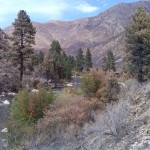
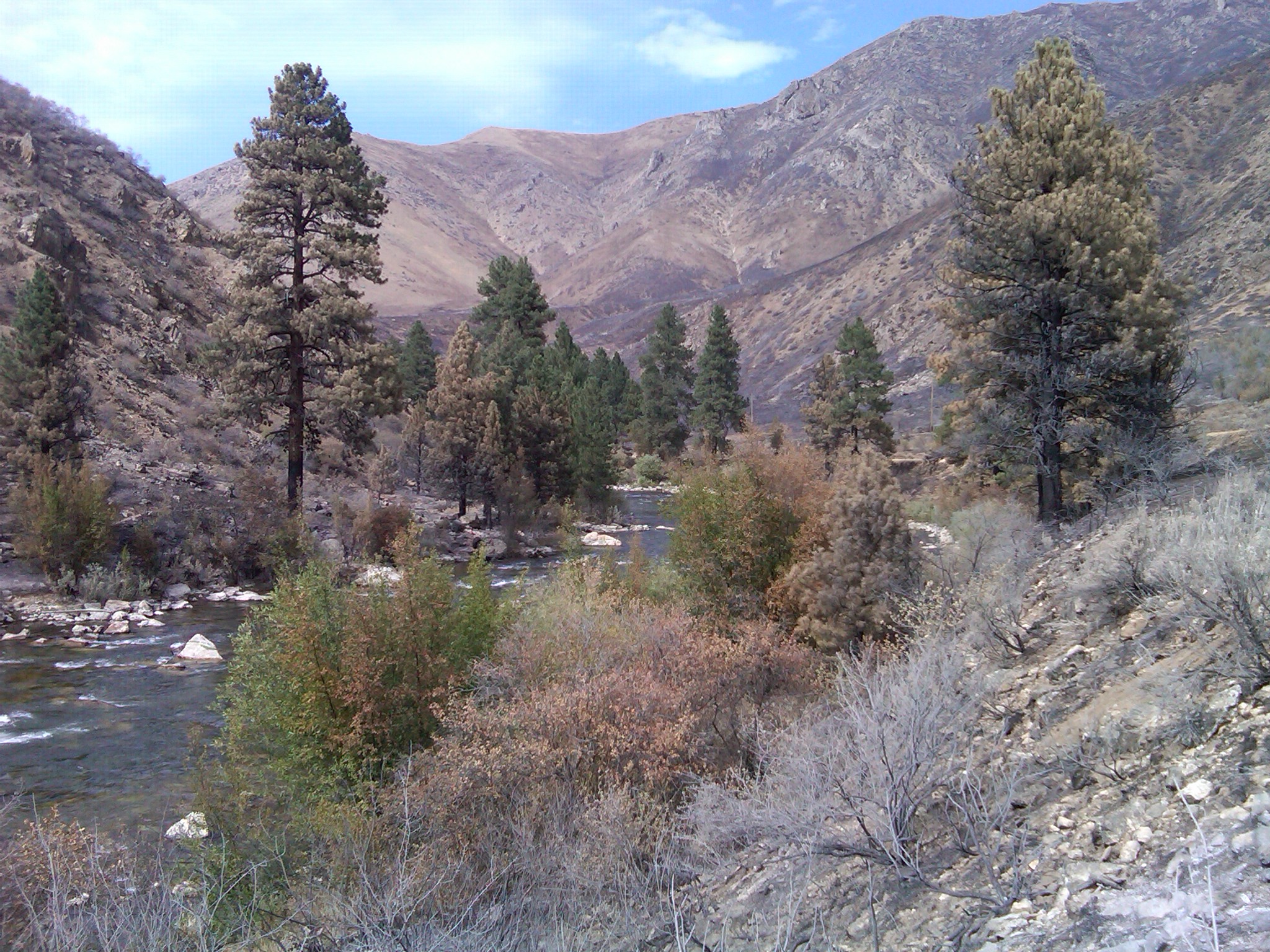
Rock garden and Pine Tree Hole We believe that it is essential that we work in collaboration and cooperation with our government agency partners in a supporting role. In our view, once they determine the strategy/way forward, priorities of work and requirements, we can then mobilize our constituents and resources to help.
There remain a lot of unknowns and we understand that the assessment of the extent of the damage will not be complete for a number of weeks. As an initial step by those of us in the community, this open forum meeting will include agency representatives to provide information on the post-fire habitat condition of the South Fork of the Boise River. It will provide the opportunity to discuss where we are today, where we think we are going, what we think is needed, and how we might help.
-
Stream Gages destroyed by Wildfire
Here is a video from the USGS with the story about the Pony & Elk fires destroying the stream gages on Dixie Creek and Pierce Creek, two tributaries of the South Fork of the Boise River downstream of Anderson Ranch Dam.
In addition, the end of the video has links to the stream gages click here for Dixie Creek, or check out this link for the gage at Pierce Creek.
-
Roads Open but Forest Closed
The current status of public access to fish the South Fork of the Boise requires some explanation. The short story is the roads are open but the Forest remains closed. The land between the road and the South Fork of the Boise River is part of the Forest.
The longer story is more complicated and deserves some detangling.
With the Elk Complex Fire a large closure on the Mountain Home Ranger District (and adjacent portions of the rest of the Boise National Forest) went into effect as the fire spread to its current 131,258 acres. The roads from Highway 20 leading to the South Fork are under the jurisdiction of the Mountain Home Highway District. As the fire involved much BLM land in the 149,384 acre Pony Complex, the road closures were extensive. Fire maps show the South Fork Boise River downstream of Anderson Ranch Dam constituted a shared border between the two wild fires. So the south bank of the South Fork is the Pony fire and the north bank is the Elk fire, if the maps are correct.
On Tuesday August 20, with the fires reaching close to containment, the closures were adjusted. Despite different government jurisdictions involved, a single announcement was issued and stated in part, “On the Pony Complex, all areas and roads affected by the fire will reopen, including all Elmore County roads.” The roads leading to the South Fork Boise from Highway 20 which were involved in the Pony fire were opened to the public at 5:00 p.m.
The news release announcing the changes stated in its lede, “With the reduction of fire activity on the Pony and Elk Complexes, the current Forest closure area has been revised and will be significantly reduced effective Tuesday afternoon, August 20 at 5 p.m. In addition, all Elmore County roads and several Boise National Forest roads will reopen on the same date and time.”
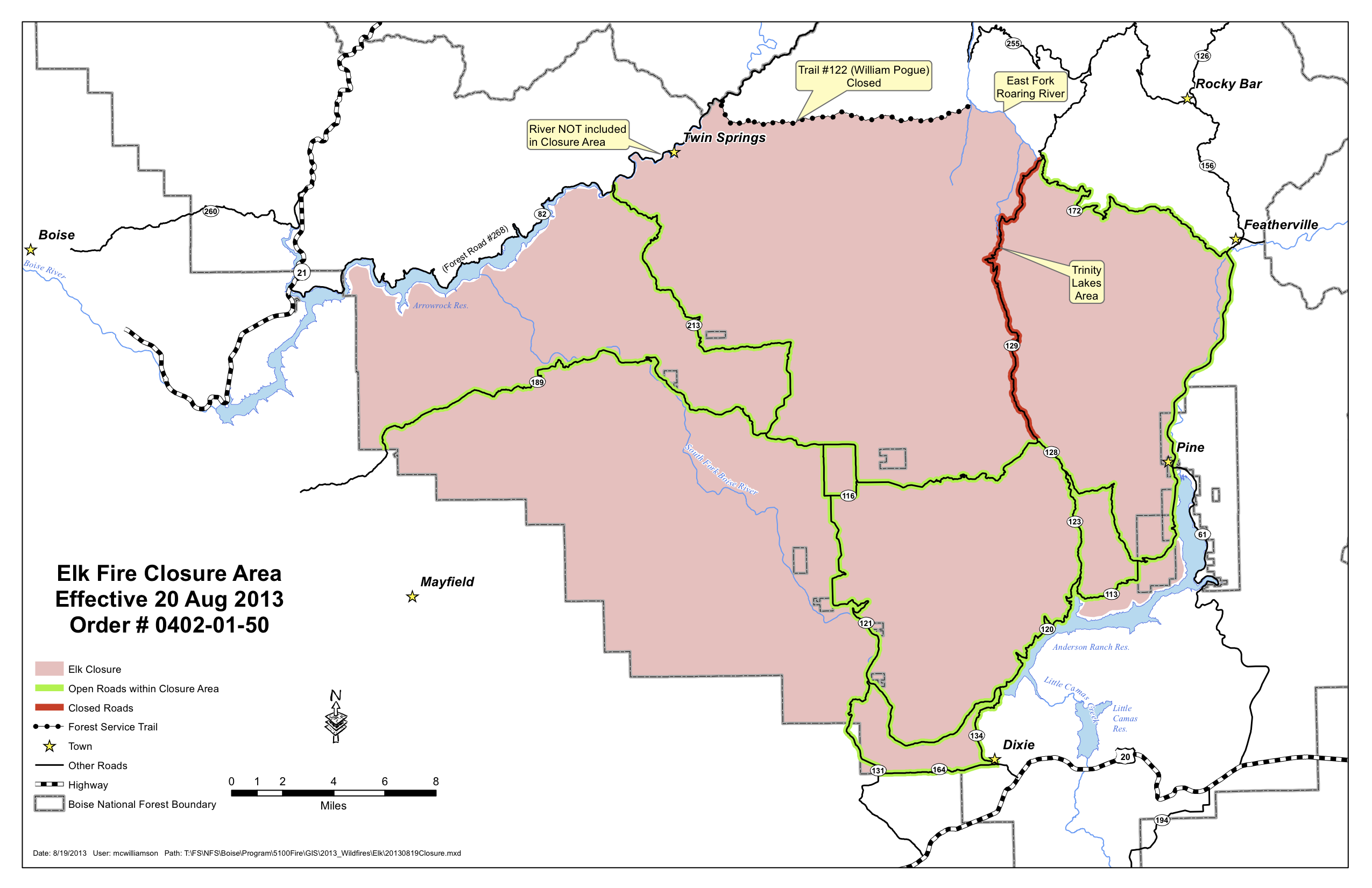
However, despite conflating a smaller forest closure area and reopening of Elmore County roads in the same announcement, the fact is the areas where the Forest reopened is in a different location, mainly in the Middle Fork Boise River country well to the north. The National Forest lands in Elmore County along the roads leading to and along the South Fork Boise River remain closed.
The closure order at the Boise National Forest website is at http://prdp2fs.ess.usda.gov/detail/boise/home/?cid=STELPRDB5035663 and sometimes it does not appear to function on some browsers. It is also available at http://www.inciweb.org/incident/article/3616/20527/. And better yet a closure map is here:
Previous blog posts document the variety in the extent and severity of the wild fire along the South Fork Boise River. Many places did not burn. Yet others did and there are many trees damaged by the fire along the streamside riparian lands that constitute a potential safety hazard to the general public.
In addition the Forest Service and Bureau of Land Management have extensive areas to assess where emergency stabilization and rehabilitation may be needed. The Granite Creek watershed, tributary to the South Fork Boise near the Pine Tree Hole, is one example of such an area. The agencies plan to complete a field assessment of the burn areas prior to changing the closure order. This assessment reportedly could take up to two weeks, and it is not clear if the 11.3 mile long corridor from Anderson Ranch Dam to Danskin bridge (an area that equates to approximately 2,000 acres) will come early, middle or late in the assessment process of the 280,642 acres affected by the two fires. Or, if areas will be opened in stages as they are assessed, versus the closure being in place everywhere until the entire assessment is complete.
So at this time anglers who are interested in visiting the South Fork are presented with the shopping equivalent of “look but don’t handle the merchandise.”